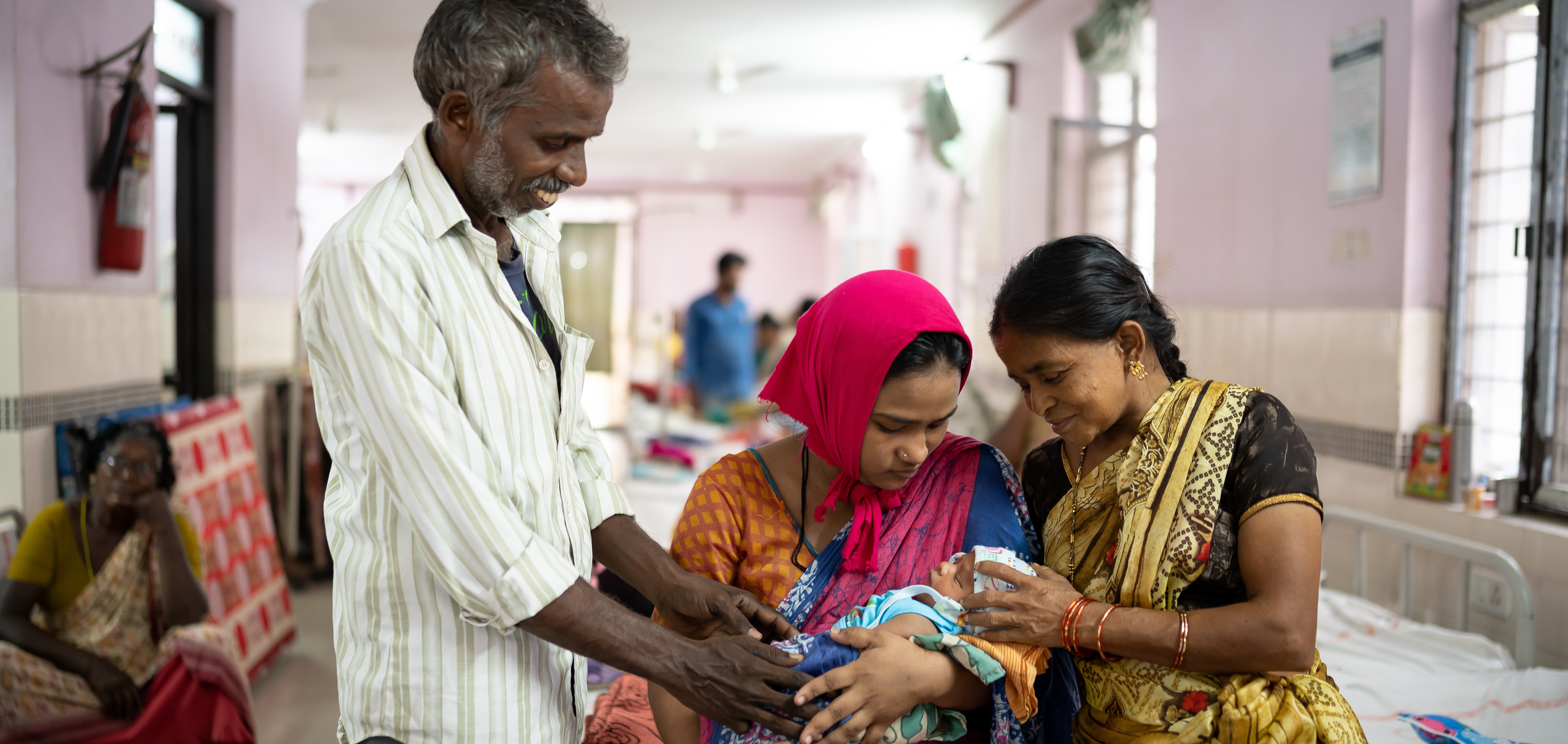
Image credit: Noora Health

Digital Medic Quarterly Update

July 2025

In an increasingly complex world shaped by rapid technological advancements and evolving global health challenges, our commitment to addressing high-need health issues in maternal and child health has never been more critical. We are dedicated to leveraging innovative solutions to improve health outcomes for families, particularly in underserved communities.

In this spirit, we are thrilled to announce that our proposal with Noora Health has received a Stage 2 grant from Stanford Impact Labs! This funding will support the integration of generative AI into Noora’s mobile Care Companion Program (mCCP), which provides essential postnatal education to families in low-resource areas of South Asia. With demand for this service soaring, our goal is to enhance efficiency while ensuring high-quality support for complex cases.

Our recent research published in the Bulletin of the World Health Organization demonstrates the effectiveness of targeted digital messaging in improving postnatal care practices. You can find a summary of our findings below.

Additionally, we invite you to explore a new open-access video curriculum on pediatric respiratory distress, developed in collaboration with Ethiopian pediatricians. This resource aims to equip healthcare providers and community members with the skills to recognize and respond to respiratory distress in children, a critical step in preventing pneumonia-related deaths.

Thank you for your continued support as we strive to make a meaningful impact in the health of communities worldwide.

Sincerely, 


Charles, Aarti, and the Digital Medic team 


Proposal to scale postnatal care education with AI receives a Stanford Impact Labs grant

 
We are delighted to share that Stanford Impact Labs has awarded a Stage 2 grant for our collaborative proposal with Noora Health. Together, we will be building, implementing, and evaluating a new generative artificial intelligence component for an existing postnatal education program, Noora’s mobile Care Companion Program (mCCP).

The program recruits families in low-resource areas of South Asia — including in India, Bangladesh, and Indonesia — to receive guidance on postnatal care via mobile phone messaging. Demand for the service is high, with Noora staff responding to over 10,000 messages daily. Implementing generative AI for more routine queries and interactions offers the potential to allow the support team to concentrate on more complex cases requiring human interaction.

Careful evaluation is needed to ensure that the generative AI platform is accurate, ethically deployed, and capable of preserving and enhancing the health benefits of the traditional mCCP platform. We will study the effect of integrating AI into mCCP on response time, user experiences, health-related behaviors, and health outcomes.
 
spotlight image

Research Spotlight

Postnatal care of mothers and newborns was improved by targeted digital messaging
Education about postnatal care delivered to families’ mobile phones via a digital messaging app led to increases in WHO-recommended practices in those households, according to our study of Noora Health’s mobile Care Companion Program, published in the Bulletin of the World Health Organization (WHO). Jamie Johnston, Digital Medic research and evaluation director, and Victoria Ward, Digital Medic medical director, led the study with researchers from Noora Health. 

  • The study was conducted in four Indian states and involved 24 hospitals, with 15 in the treatment group and 9 in the control group.
  • Six weeks of concise but comprehensive messaging postpartum resulted in increased rates of breastfeeding, skin-to-skin care, and better cord care, as well as nonrestrictive eating and drinking, according to self reports by mothers in the study.

  • The messaging built upon an in-hospital education program for postpartum mothers and their family caregivers.

  • The study was designed to recognize the crucial role that family members in the region tend to play in postnatal care. It accommodated shared mobile phone use, often controlled by a male member of the household.


The results pointed to the potential of digital interventions in under-resourced areas to overcome barriers to quality in-person care.

You can read the full study, titled “ A mobile messaging service for families on postnatal knowledge and practices: a cluster randomized trial, India,” on the website of the National Center for Biotechnology Information (NCBI).
Explore the findings

New Course: Pediatric Respiratory Distress


Pediatric Respiratory Distress: six brief videos

A new open-access video curriculum shows how to recognize the signs and symptoms of respiratory distress in children. Developed in coordination with Ethiopian pediatricians at the University of Gondar, it is relevant to healthcare providers and community members in all settings, regardless of location or resources. It is available in English and Spanish.

Identifying breathing problems early is an important way to combat pneumonia, which causes respiratory distress that can worsen quickly. Pneumonia leads to 700,000 deaths in children worldwide each year — most of them preventable.

CME/CE credits for the course are available for physicians and nurses.
Watch the course overview

MORE UPDATES

Editorial: Learning interventions and training: providing support during health emergencies. Matt Strehlow, emergency medicine professor, and Jamie Johnston, Digital Medic research and evaluation director, helped guest edit a special edition of Frontiers in Public Health that explores just-in-time, science-based training for health workers and policymakers during crises.

Working to meet the global need for mental health education. Our May blog post highlights the content we are developing for health workers in sub-Saharan Africa and for school staff in the Bay Area. It also links to our existing open-access library of mental health resources.


More research and health education projects are underway. Stay tuned for more Quarterly Updates to learn about new and ongoing projects in community health education.

HEALTH EDUCATION RESOURCES

Expanding knowledge, improving health.