Battery Innovations to Fight Climate Change
August 26, 2019 | 1:00-2:00 pm PDT

If we are to reverse the dire threat of climate change, we must find ways to reduce the 60% of carbon emissions that come from transportation and the electric grid. Improved battery technology is critical to this effort, enabling electrification of transportation as well more efficient electric grid storage.
In recent years, battery systems have dramatically improved due to breakthroughs in electrochemistry, materials, cell and battery pack design, modeling and control algorithms, and power electronics. Join us as Professors Abbas El Gamal and Ram Rajagopal introduce their new Stanford course on Battery Systems for Transportation and Grid Services. They will discuss the motivation behind this unique, interdisciplinary offering, as well as recent innovations in battery systems, and Stanford's Powernet and EV50 initiatives.
You Will Learn:
- How high-capacity battery systems are transforming mobility solutions and the grid that powers them
- How improved hardware and software can aggregate and control local energy resources, lowering energy costs
- What it will take to get to 50% or more adoption of electric vehicles
About the Speakers
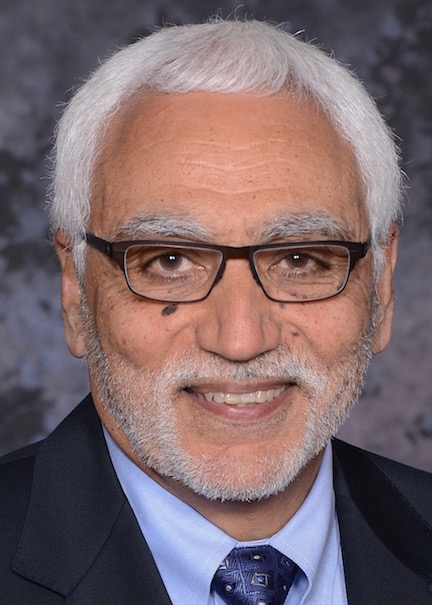 Abbas El Gamal is the Hitachi America Professor in the School of Engineering and Professor in the Department of Electrical Engineering at Stanford University. His research spans several areas, including network information theory, Field Programmable Gate Array, and digital imaging devices and systems. His research group is also currently involved in projects on Smart Grids.
 Ram Rajagopal is an Assistant Professor of Civil and Environmental Engineering at Stanford University. He is the founder and director of the Stanford Sustainable Systems Lab. He specializes in creating and deploying large sensing systems, and using the generated data together with novel statistical algorithms and stochastic control to achieve sustainable transportation, energy, and infrastructure networks.
Abbas El Gamal is the Hitachi America Professor in the School of Engineering and Professor in the Department of Electrical Engineering at Stanford University. His research spans several areas, including network information theory, Field Programmable Gate Array, and digital imaging devices and systems. His research group is also currently involved in projects on Smart Grids.
Ram Rajagopal is an Assistant Professor of Civil and Environmental Engineering at Stanford University. He is the founder and director of the Stanford Sustainable Systems Lab. He specializes in creating and deploying large sensing systems, and using the generated data together with novel statistical algorithms and stochastic control to achieve sustainable transportation, energy, and infrastructure networks.Note: A recording of this webinar will be shared within one week of the live session.
Questions?
Please contact us at [email protected] or 650-204-3984.
Please contact us at [email protected] or 650-204-3984.
REGISTER TO ATTEND
Free Stanford Webinar